Research
Abstract
I study how to make machine reasoning checkable. That means pairing language models with formal tools, so what a model produces can be verified instead of trusted, and then using the verifier's feedback to make the model better.
My current work applies this to access-control policy synthesis. The broader question is how learning and proof can work together.
1Interests
Language models, Formal verification, Reinforcement learning, Deep learning, Mathematics.
2Papers
 arXiv preprint, 2026
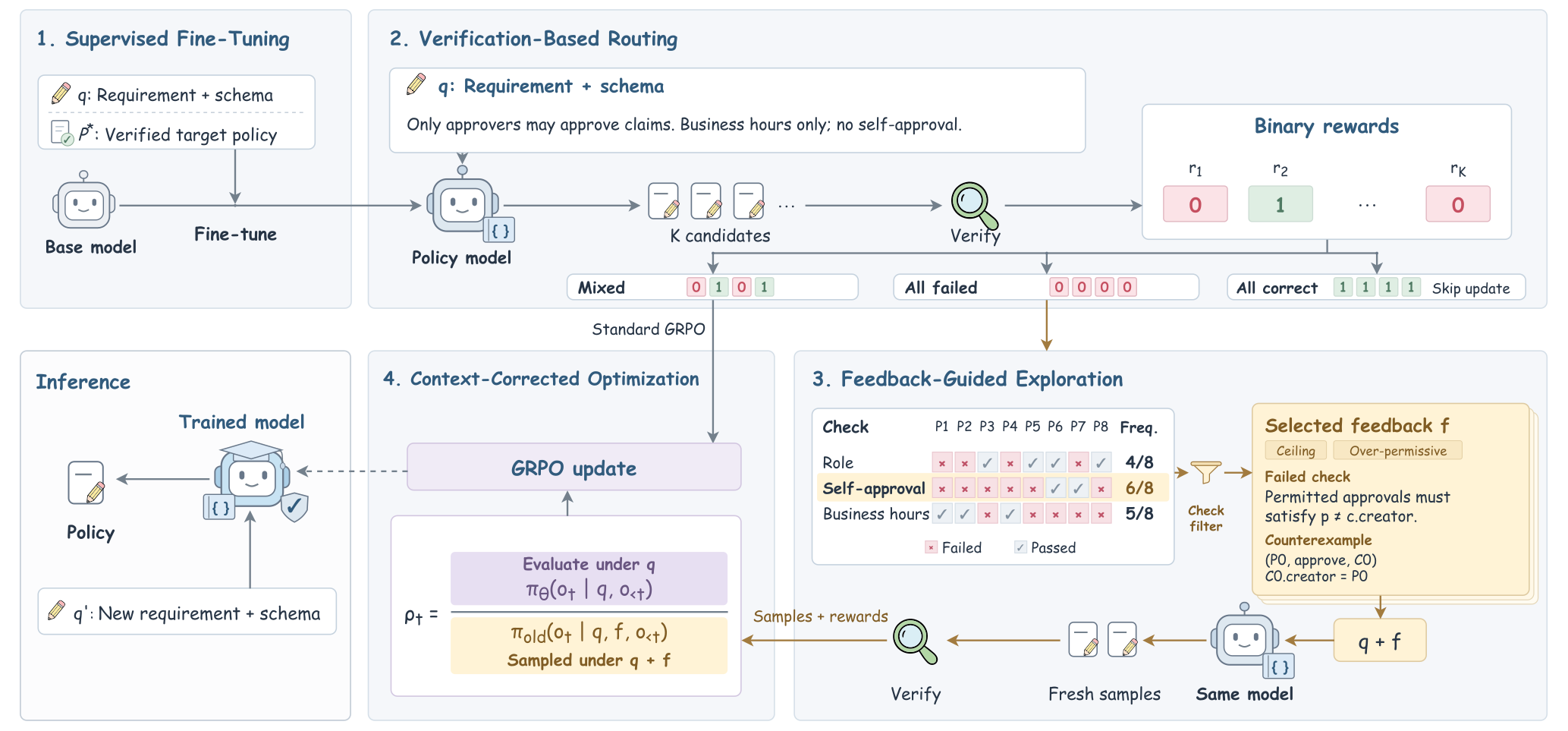
RAISE: Reinforcing Access Control Policy Synthesis in LLMs via Symbolic Evaluation
Reinforcement learning from a formal verifier trains a 9B model to beat zero-shot frontier models at writing correct Cedar policies.
arXiv preprint, 2026
RAISE: Reinforcing Access Control Policy Synthesis in LLMs via Symbolic Evaluation
Reinforcement learning from a formal verifier trains a 9B model to beat zero-shot frontier models at writing correct Cedar policies.
 arXiv preprint, 2026
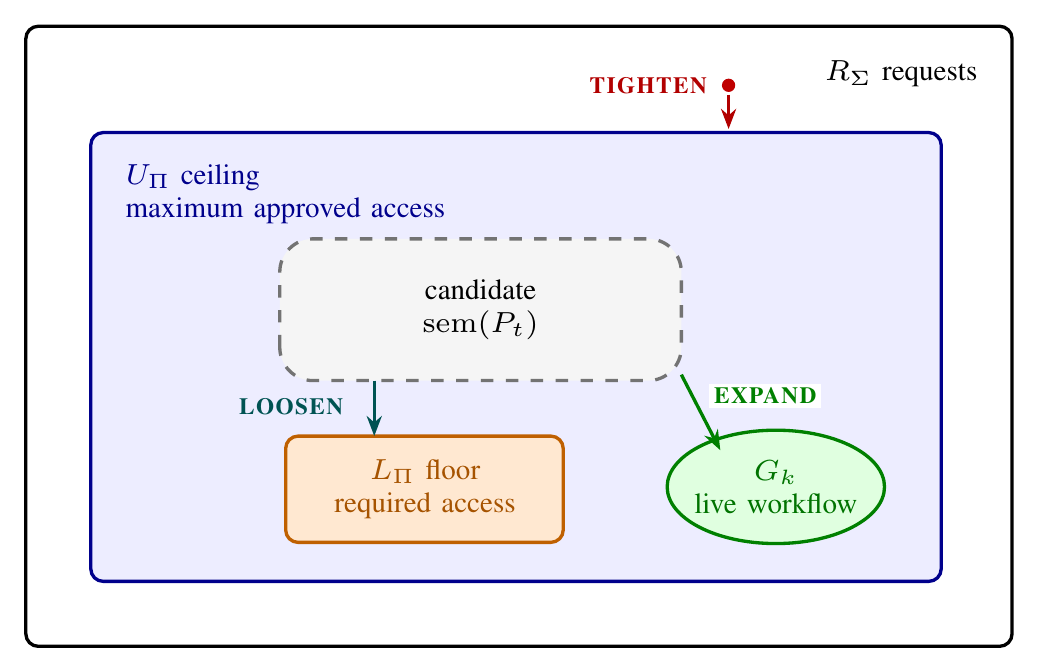
AutoCedar: An Agentic Framework for Verifier-Guided Access Control Policy Synthesis
Fix the intended meaning first, then let a verifier steer the model to a provably correct policy. Converges on all 221 CedarBench tasks.
arXiv preprint, 2026
AutoCedar: An Agentic Framework for Verifier-Guided Access Control Policy Synthesis
Fix the intended meaning first, then let a verifier steer the model to a provably correct policy. Converges on all 221 CedarBench tasks.
 ISSRE 2026
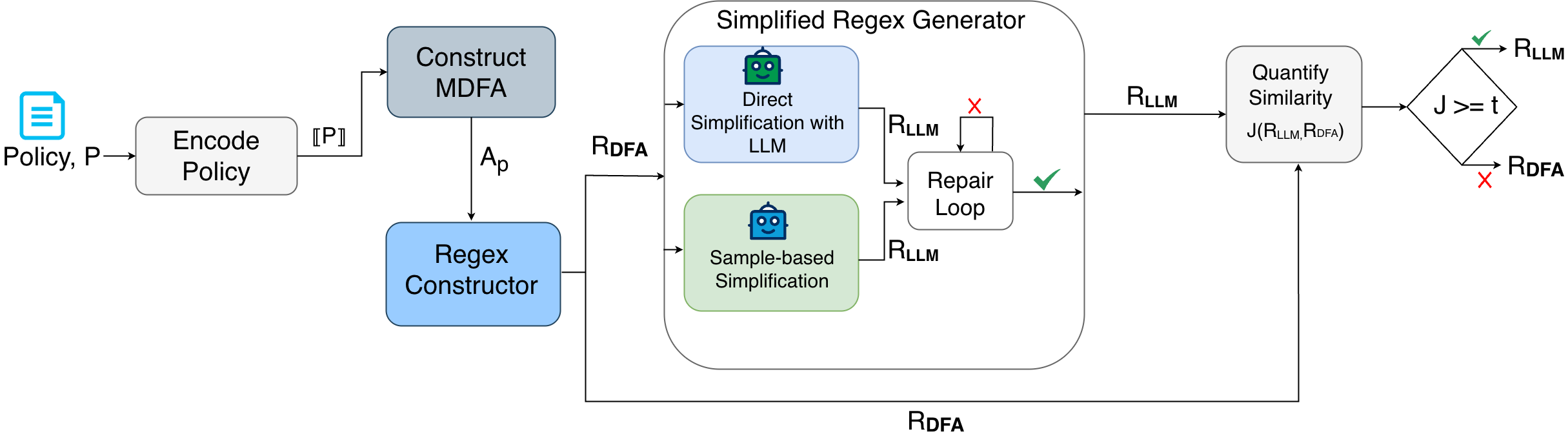
Neurosymbolic Characterization for Reliable Access Control Policy Analysis
Automata and model counting keep LLM policy summaries faithful. Raised change-review accuracy from 39 to 93 percent in a user study.
ISSRE 2026
Neurosymbolic Characterization for Reliable Access Control Policy Analysis
Automata and model counting keep LLM policy summaries faithful. Raised change-review accuracy from 39 to 93 percent in a user study.
 NLBSE @ ICSE 2025
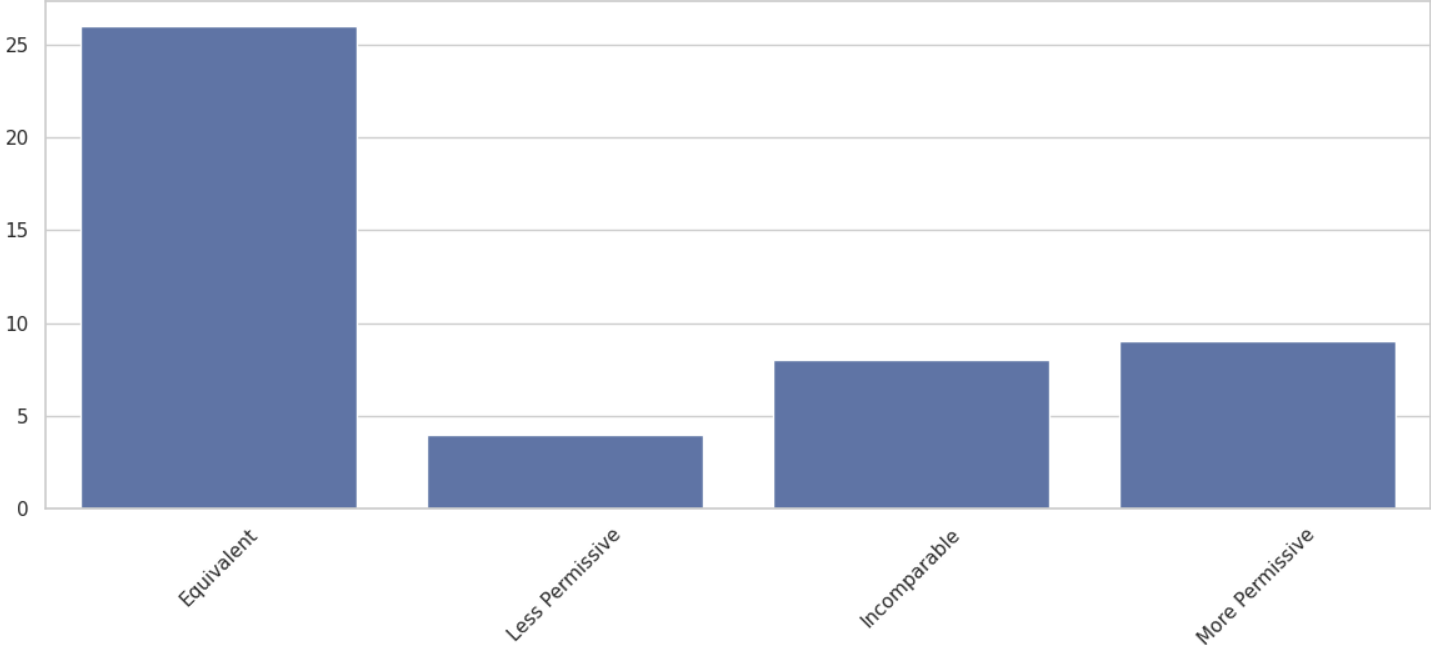
Synthesizing Access Control Policies Using Large Language Models
Zero-shot LLMs write valid cloud policies, and only precise, structured specifications make them correct.
NLBSE @ ICSE 2025
Synthesizing Access Control Policies Using Large Language Models
Zero-shot LLMs write valid cloud policies, and only precise, structured specifications make them correct.
3References
google scholar-
Yingming Zhou, Adarsh Vatsa, William Eiers.
RAISE: Reinforcing Access Control Policy Synthesis in LLMs via Symbolic Evaluation.
arXiv preprint, 2026.
pdf arxiv
abstract
Translating natural-language access-control requirements into policies requires careful reasoning about permissions, constraints, and exceptions, and even frontier LLMs often produce policies that violate the intended authorization semantics. We construct CedarInstruct, a dataset of 5,800 scenarios across 44 domains with verified target policies, and introduce RAISE, which trains policy synthesizers from formal verification in two stages. Verified supervised fine-tuning is followed by a reinforcement learning stage that learns from verifier signal. With about 5.4K verified scenarios and LoRA fine-tuning, RAISE-OC trains Qwen3.5-9B to surpass much larger zero-shot frontier models in semantic success on held-out scenarios, and training transfers to the independently constructed CedarBench.
-
Adarsh Vatsa, Sachi Shome, Yingming Zhou, William Eiers.
AutoCedar: An Agentic Framework for Verifier-Guided Access Control Policy Synthesis.
arXiv preprint, 2026.
pdf arxiv
abstract
Large language models are increasingly used to turn natural-language requirements into code. In access control, that shortcut is dangerous, because a generated policy can compile and read correctly while granting access that no one approved. The difficulty is not only writing policy code. It is fixing what the requirements mean before code is written, and then checking that the final policy actually satisfies them. AutoCedar is an agentic framework that pins down intent first and lets a verifier guide synthesis from there.
- Adarsh Vatsa, Bethel Hall, William Eiers. Neurosymbolic Characterization for Reliable Access Control Policy Analysis. ISSRE 2026, 2026.
- Adarsh Vatsa, P. Patel, William Eiers. Synthesizing Access Control Policies Using Large Language Models. NLBSE @ ICSE 2025, 2025.