RAISE: Reinforcing Access Control Policy Synthesis in LLMs via Symbolic Evaluation
#Problem
Translating natural-language access requirements into a Cedar policy means reasoning about permissions, constraints and exceptions at once. Frontier models still write policies that read well and violate the intended authorization semantics.
#Data
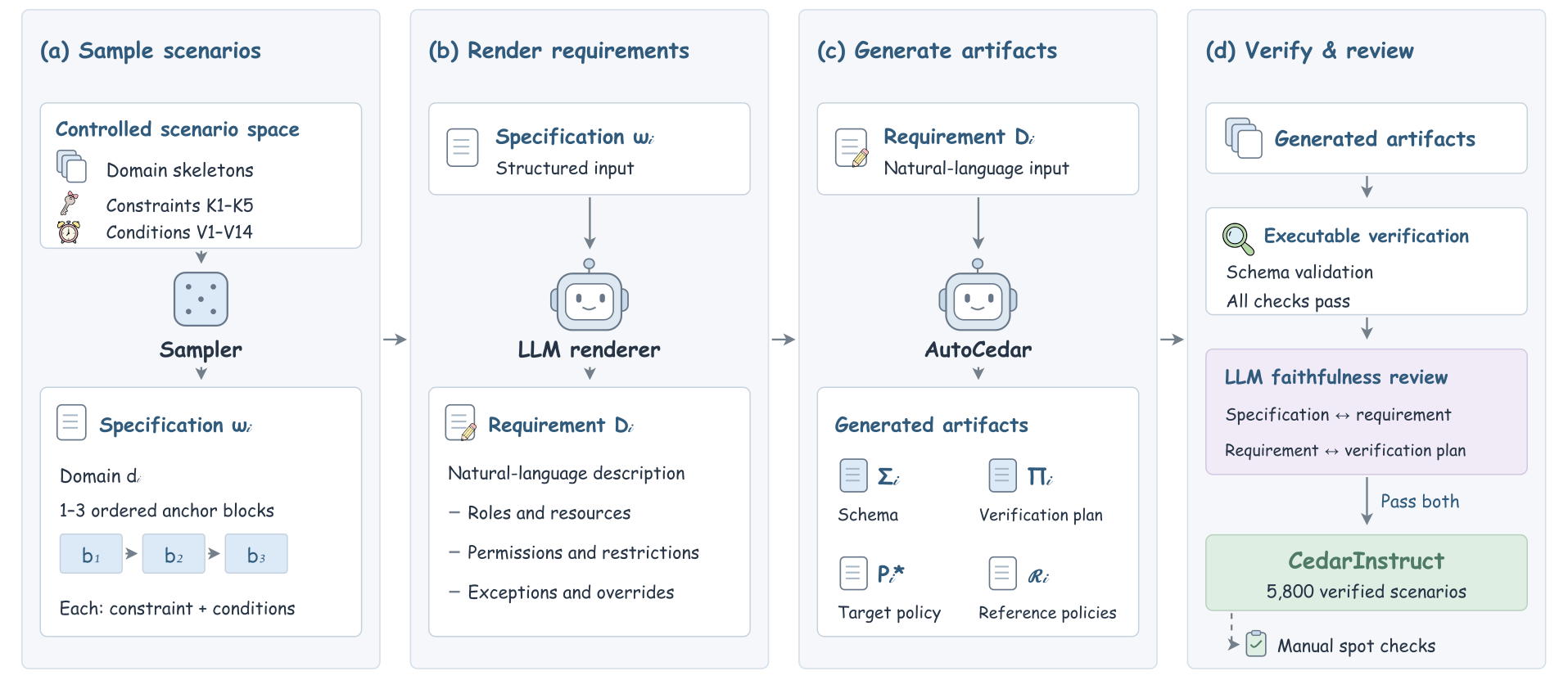
CedarInstruct is the first dataset that supports both training and semantic evaluation for formally verifiable Cedar synthesis.first dataset to train and verify Cedar synthesis It holds 5,800 scenarios across 44 domains, plus 1,408 scenarios for a single synthetic organization. Every scenario carries a verified target policy and an executable verification plan.
#Method
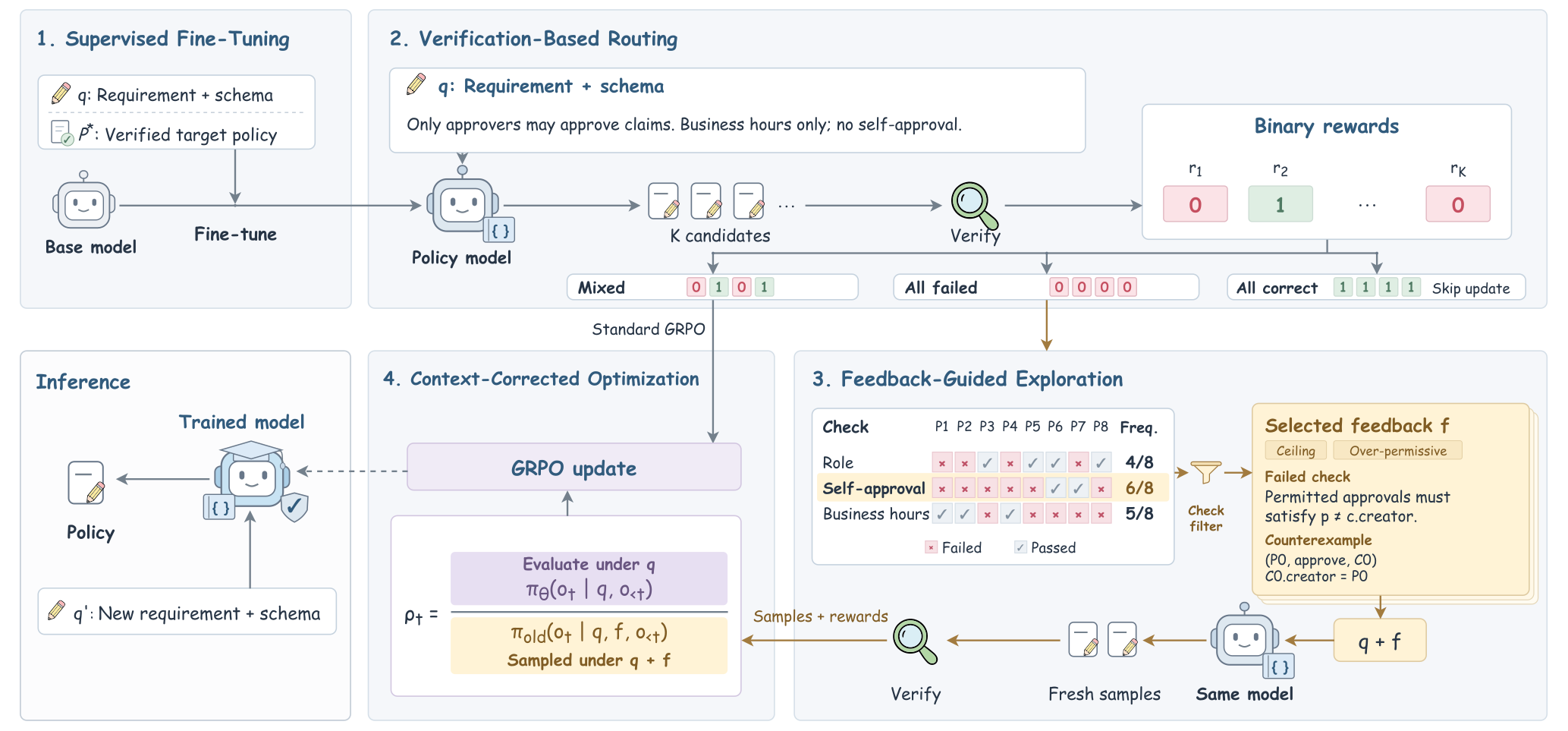
RAISE trains a policy synthesizer from formal verification in two stages. Verified supervised fine-tuning comes first. A reinforcement learning stage then learns from the verifier's judgment of the model's own attempts. At inference the model sees only the requirement and the schema.
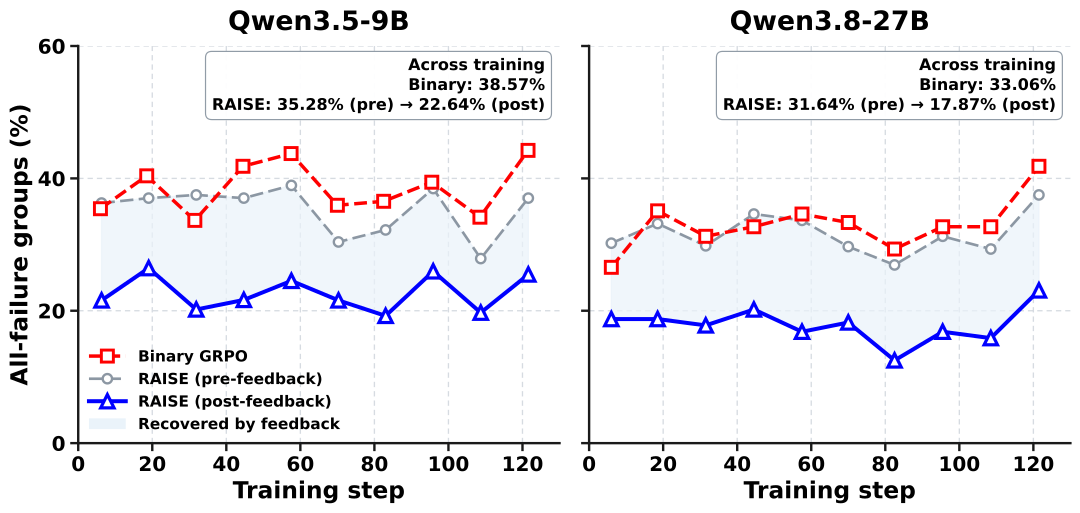
Of six RL variants that consume progressively richer verifier signal, one clearly beats supervised fine-tuning.how the verifier is used beats how much RAISE-OC turns failed checks and symbolic counterexamples into guided exploration and learns from the guided samples with an off-context GRPO update.
#Findings
Fine-tuning works mainly by letting a model express authorization logic it already has. Untrained models rarely write valid Cedar, yet they often reason correctly when they do. After fine-tuning, how the verifier's information is used matters more than how much of it is used.
#Results
With about 5,400 verified scenarios and LoRA fine-tuning, RAISE-OC trains Qwen3.5-9B to beat zero-shot GPT-6 Astra by 13.33 points and Claude Opus 5 by 16.26 points in semantic success on held-out scenarios.a 9B model, 13 to 16 points ahead of frontier models The training transfers to the independently constructed CedarBench.