AutoCedar: An Agentic Framework for Verifier-Guided Access Control Policy Synthesis
#Problem
A generated access-control policy can compile and read correctly while granting access no one approved. The hard part is fixing what the requirements mean before any code is written, and then proving the final policy meets that meaning.
#Method
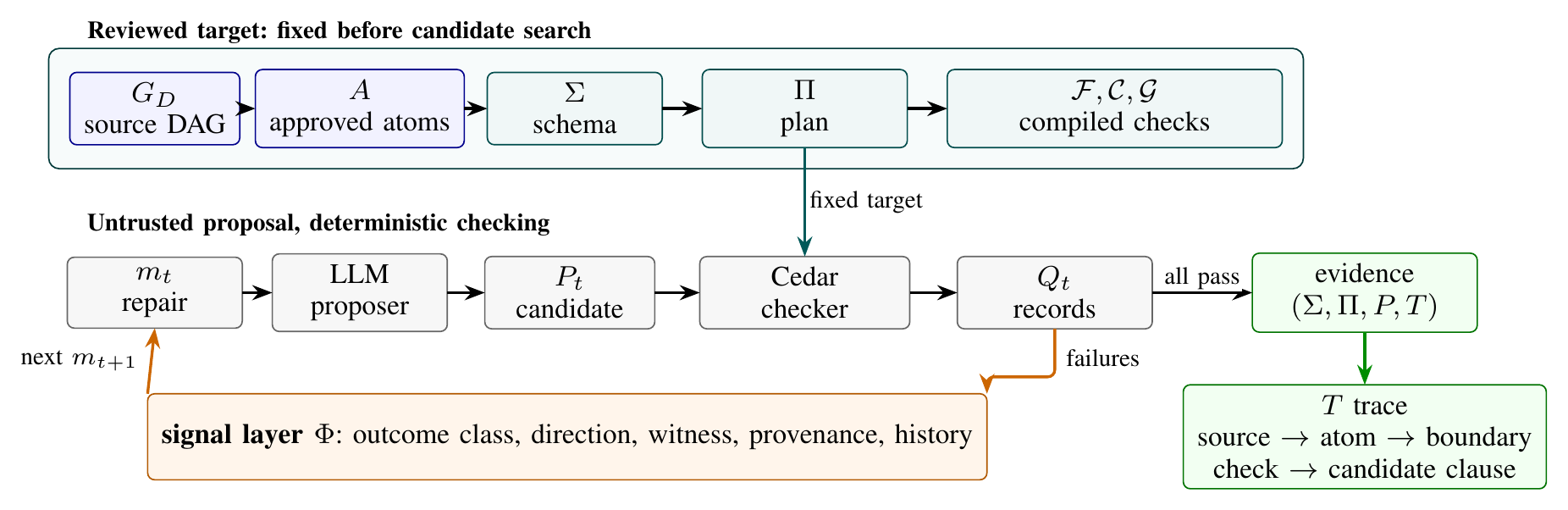
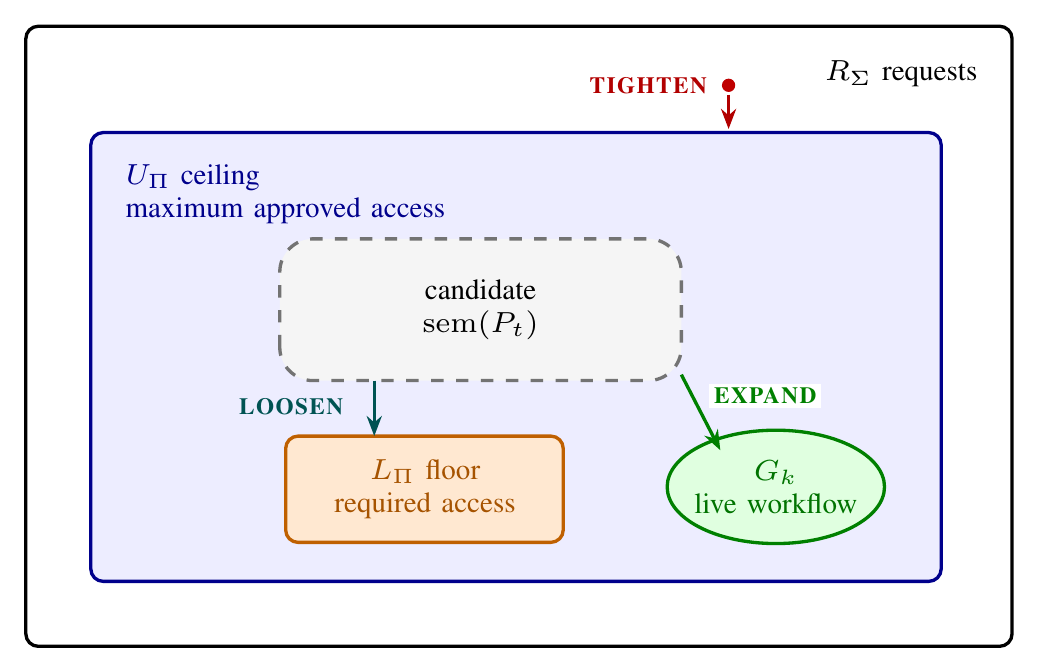
AutoCedar splits schema and policy authoring into small intent atoms, reviewable claims about vocabulary and behavior. Atoms that pass mechanical validation and human review become a fixed target that the model cannot change.the model never touches the target Floors state what access must remain possible, ceilings state what must never leak, and liveness slices keep approved workflows reachable.
The model proposes a candidate policy and a symbolic verifier checks it against the target. A signal layer converts every failure into a repair instruction that says whether to broaden, narrow or restructure the policy. The verifier owns the target, the history and the final decision.
#Results
AutoCedar converges on all 221 tasks of CedarBench, a new benchmark of authorization tasks paired with executable semantic boundaries.221 of 221, every one verified Direct generation from the same approved schema still produces policies that pass validation and break floor or ceiling properties. Across three requirements corpora in healthcare, education and conference management, AutoCedar turns noisy prose into reviewed schemas, formal checks and a globally verified Cedar policy store.