Neurosymbolic Characterization for Reliable Access Control Policy Analysis
#Problem
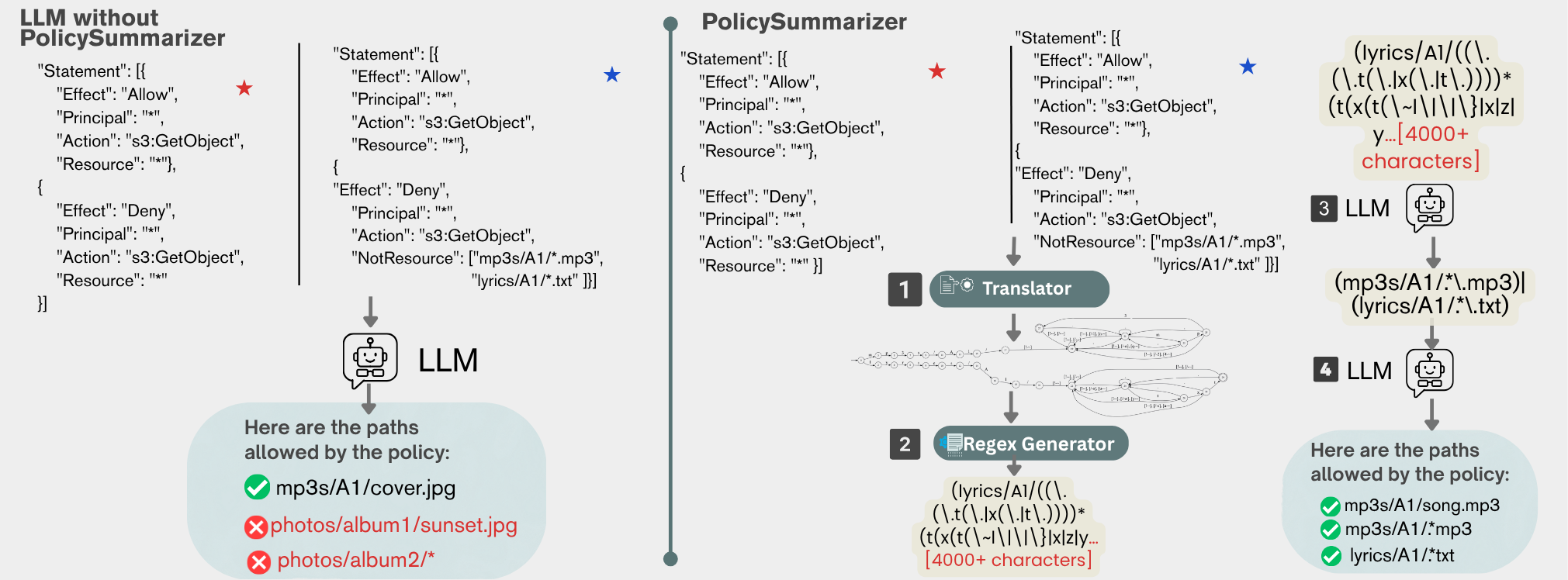
Administrators rarely know whether a cloud policy permits exactly what they intend. Language models explain policies fluently, yet they predict individual access decisions with only 59 to 68 percent accuracy, and a policy rebuilt from a model's own explanation is often not equivalent to the original. The verification gap persists no matter who wrote the policy. This is the Verifiable Synthesis Paradox.fluent explanations, unreliable semantics
#Method
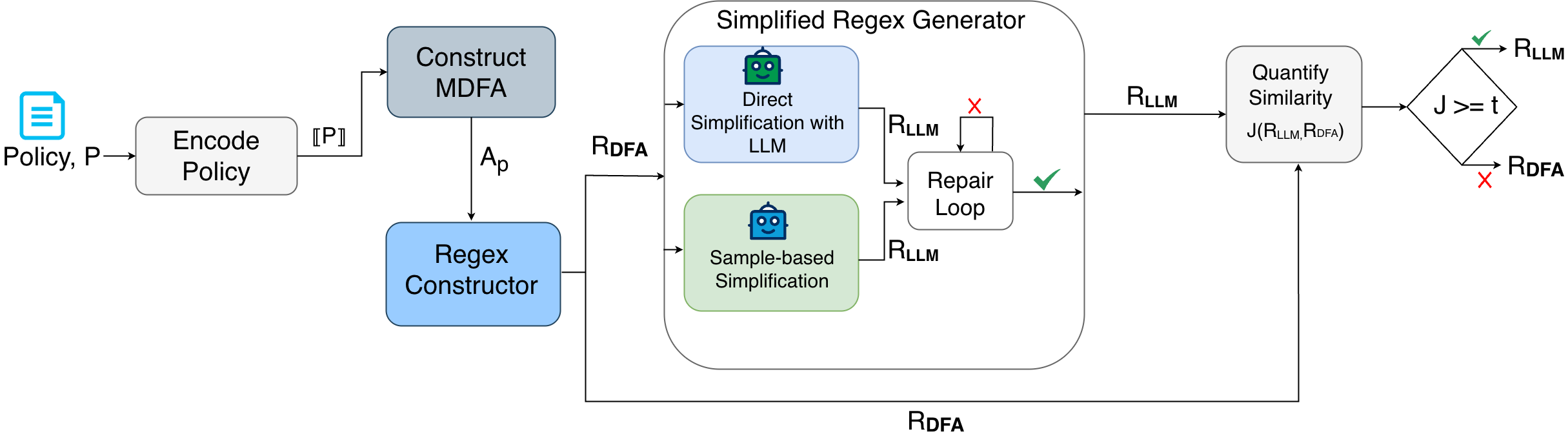
PolicySummarizer encodes a policy as constraints, compiles them into a finite automaton and extracts a regular expression for every request the policy allows. A language model rewrites that expression into a short, readable form. Model counting then measures how faithful the rewrite is, and any rewrite below a user-set threshold is replaced by the formally derived one.fidelity is measured, never assumed The same machinery characterizes the difference between two versions of a policy.
#Results
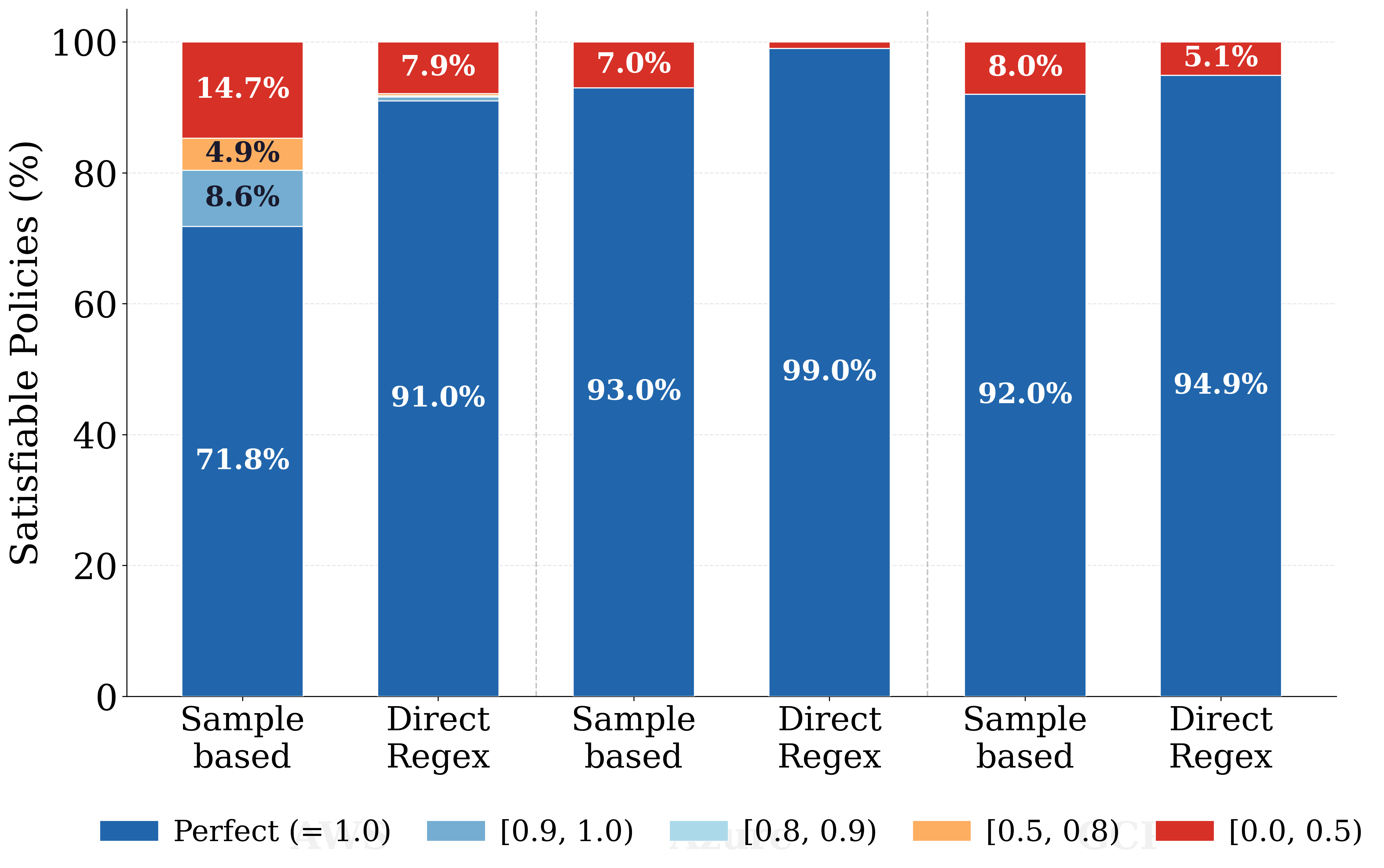
On 546 AWS, 100 Azure and 100 Google Cloud policies, PolicySummarizer reaches a mean similarity of 0.93 and a 2.7-fold improvement over an SMT-based baseline. In a study with 41 participants, accuracy on the hardest change-review task rose from 39 to 93 percent, with lower reported mental demand.39% → 93% on the hardest task The tool is open source.